En garde!
THE ART OF BEING READY
PROLOGUE
THE GRIP
(what must be said before the blade is drawn)
This account is in no way affiliated with Zhou Yi Ran (周翊然). It was created solely for writing and roleplaying purposes. I, the writer, hold full rights to all original content and thoughts expressed through the character Cedric Finnian Wen.
Cedric Finnian Wen is a fictional character created by the writer under the pseudonym NINE. Any resemblance to real names, places, times, or events is purely coincidental.
Strictly prohibited: godmodding, metagaming, or powergaming involving Cedric Finnian Wen without prior permission. I will not hesitate to address such actions if they occur.
I'm always open to discussions about potential writing collaborations.
Please note that this account will not always operate in character (IC). Most of the time, it will function out of character (OOC). Occasionally, the account may alternate between IC and OOC within the same interaction. I will make a conscious effort to mark posts or interactions clearly when Cedric Finnian Wen is speaking OOC. The indicators for such will be outlined clearly on this account.
| INDICATOR | DESCRIPTION |
| "Lorem ipsum" // Lorem ipsum | In Character |
| [ Lorem ipsum ] | Out of Character |
| NINE. Lorem ipsum // W/N. Lorem ipsum | Writer's taking over |
PROLOGUE: THE GRIP
ACT I
THE POISE
(where names wait like unsheathed blades)
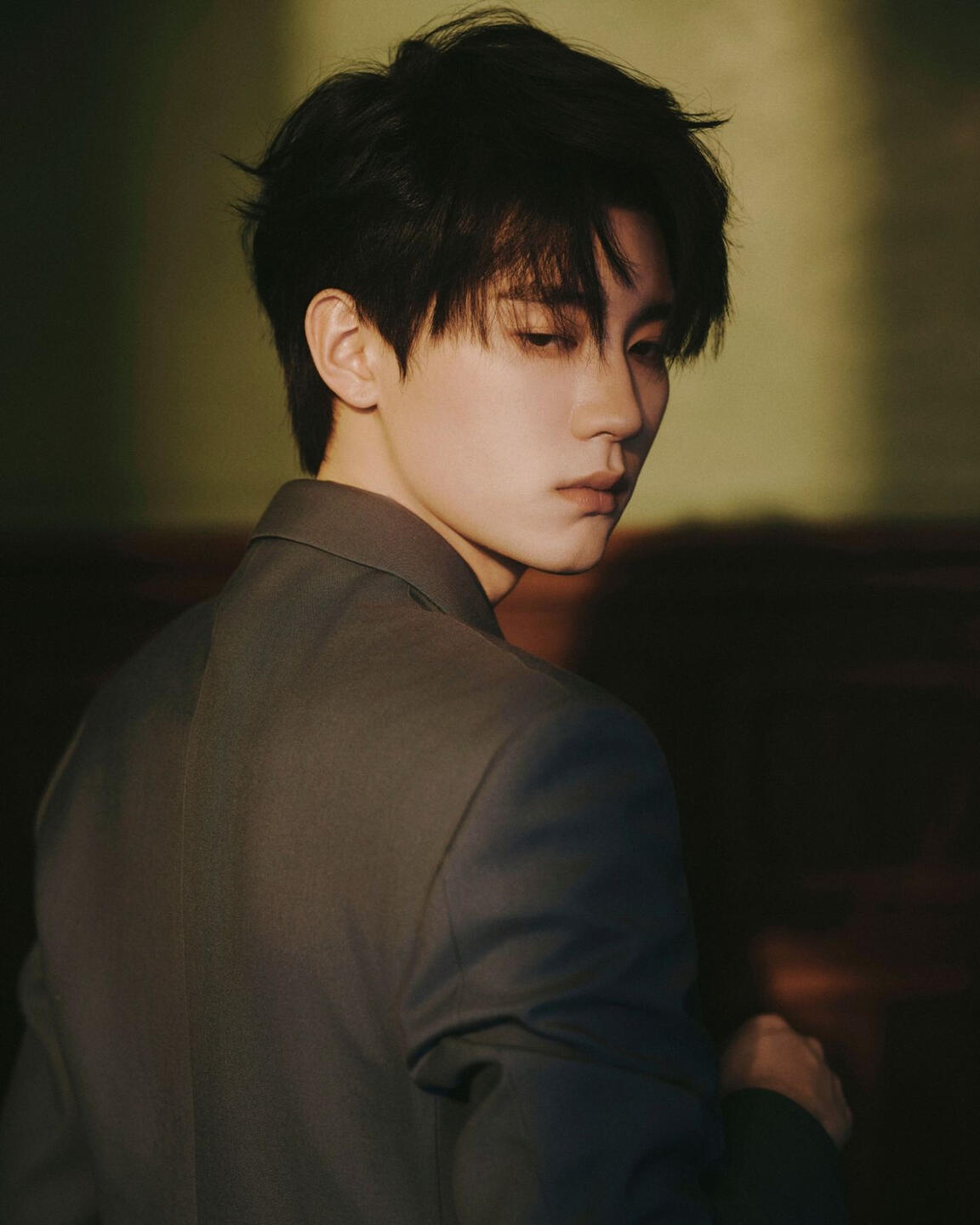
| NAME | Cedric Finnian Wen |
| NOMENCLATURE | Cedric : "Ruler," "kindly," or "beloved leader." || Finnian : "Fair," "bright," or "clear." || Wen ( 文 / Wén ) : "Writing," "culture," "civilization," "refined scholarship." |
| BIRTHDATE | August 20, 2000 |
| BIRTHPLACE | Suzhou, Jiangsu, China |
| GENDER | Male |
| PRONOUNS | He/Him |
| NATIONALITY | British-Chinese |
| CURRENT RESIDENCE | Marylebone, London, UK |
| OCCUPATION(S) | Cultural Attaché / Political Advisor ── Foreign, Commonwealth & Development Office (FCDO), Fencing Instructor ── Part-time coach at a private salle in Belgravia, Essayist/Columnist ── Occasional writer for The Golden Margin under a pseudonym. |
| FACE CLAIM | Zhou Yi Ran (周翊然) |
Born British-Chinese, Cedric grew up between the rain-grey hush of Cambridge and the lake-hum air of Hangzhou — a life shaped by airports and afterthoughts. His parents’ work was always elsewhere, so he learned early to carry home inside him. He doesn’t mind waiting; thresholds suit him.
At ten, he picked up an épée. It suited his temperament — restrained, exact, a little removed. He trained for years, earned medals he never framed. At seventeen, he stopped competing. “The blade stayed the same. I didn’t,” he once said.
He’s reserved, not cold. Listens more than he speaks. Soft-spoken, sharp-witted. He often answers questions with another question, or not at all.
He folds paper when anxious. Walks in slow circles when thinking. His playlists are titled things like “for weather that can’t decide” and “almost meaning it.”
He alphabetizes strangers’ bookshelves when left alone in their homes. Drinks Lapsang Souchong even in summer. Sketches in the margins of forms he should be filling out.
He plays cello like someone remembering a feeling. Writes only with his left hand, though he is ambidextrous. Keeps a fountain pen with no ink. “Just in case,” he says.
He prefers letters to texts. His apologies arrive folded, sealed, and weighed in the hand.
He remembers his grandmother’s voice — humming Teresa Teng songs, brushing his hair, teaching him how to sew buttons and not waste rice. He still hems his own cuffs.
His comfort dish is congee with century egg and pork. He always adds more scallions than needed.
He doesn’t have a favorite color, but once admitted: “The blue before a storm feels like mine.”
Early bird or night owl? Neither. Cedric wakes just before light, when the world is still unsure of itself. That’s when he feels most like himself too.
ACT I: THE POISE
ACT II
THE LUNGE
(every step forward is a kind of surrender)
En garde!
(The French word for “on guard" it is the first in a sequence of commands that signals the start of a bout. It describes the position fencers take before a bout).There is a peculiar stillness before things begin. Not silence—how rare true silence is—but something gentler, heavier. A hush, perhaps. As if the world is exhaling but hasn’t decided whether to inhale again. I used to believe that this stillness was peace. But it is not peace. It is a pause. A suspended breath. And I have lived my whole life inside that pause.They say “en garde” as if it were a position. A stance. But I think it’s closer to a condition. A manner of living. The slight tightening of the shoulders. The breath you dare not waste. The glance that measures, calculates. You don’t ask what is coming. You simply endure its arrival.Prêt?
(Prêt is the second in a sequence of commands that signals the start of the bout, meaning “ready” in French).Are you ready?I have been asked that question more times than I care to count, and I’ve lied each time. No one ever tells you what to be ready for. It’s never just the blade—it’s the disappointment. The second-guessing. The failure that arrives dressed as hesitation. The kind of readiness they ask for is not the kind you can pack into a suitcase or rehearse in front of a mirror. It is a slow, quiet erosion. The readiness to be wounded.Allez!
Allez is the final command that signals fencers to begin competing, it means “go” in French).And so you move. Not because you’re ready, but because the world does not wait for readiness. There is a rhythm to forwardness—a choreography that demands your participation. One step, and suddenly you are within reach of someone else’s will. And that—well, that is the most dangerous place to be.You must not flinch.But flinching is human, is it not?I flinch every day. In small ways. In polite silences and swallowed replies. In the way I replay conversations long after they’re over, hoping to rewrite them in my mind.Fencing is not violence. That’s what I tell myself. Violence is clumsy. Fencing is deliberate. It is the art of calculated distance—of speaking without ever truly touching. The blade is cleaner than words. More precise. It trembles less.There are days I think the blade tells fewer lies than I do.Advance, engage, Fleche──attack!There is a move in fencing—reckless, wild, strangely elegant. You hurl yourself forward like a question you’re afraid to ask. I tried it once. It was unremarkable. I lost the point. But there was something in that moment—the blurred line between surrender and audacity. I think about it often. The sting of it.Some losses do not leave scars. They leave you quieter. That’s all.
Recover—reprise, en garde!
(Recover is when a fencer returns to the en garde position after an attack. Also called a reprise).Always, we return to the stance. En garde. It is the pose of those who know better than to believe in safety. A mask of calm over a history of tremors. You learn to disguise your faltering—everyone does, eventually.And yet, every match is a chance to lose again. Reprise. Try again, they say. Try as if it will be different. As if the past is not always crouched at the edge of your lunge.There are three blades in fencing. Foil is decorum. Sabre is speed. But épée—épée is the one that feels most like life. It counts every touch. Every contact. No flourish, no flair. Just proof.I chose it because it rewards restraint. Not courage. Not cleverness. Just the act of waiting long enough to see clearly.At night, when sleep avoids me, I do not relive victories. I watch the almosts. The seconds I did not move. The silence between action and regret. These are my companions in the dark.They say readiness is a virtue. But I think it is a condition of sorrow. Of carrying your guard long after the danger has passed. Of never relaxing, because the moment you do, the world asks: Prêt? (Ready?)And you are not.You never truly lower your sword. You only learn how to make it seem as though you have.En garde, again.Not because you want to. Because you must. Because somewhere along the way, you forgot how else to be.
(2/2)
TO BE CONTINUED...
SINCERELY,